
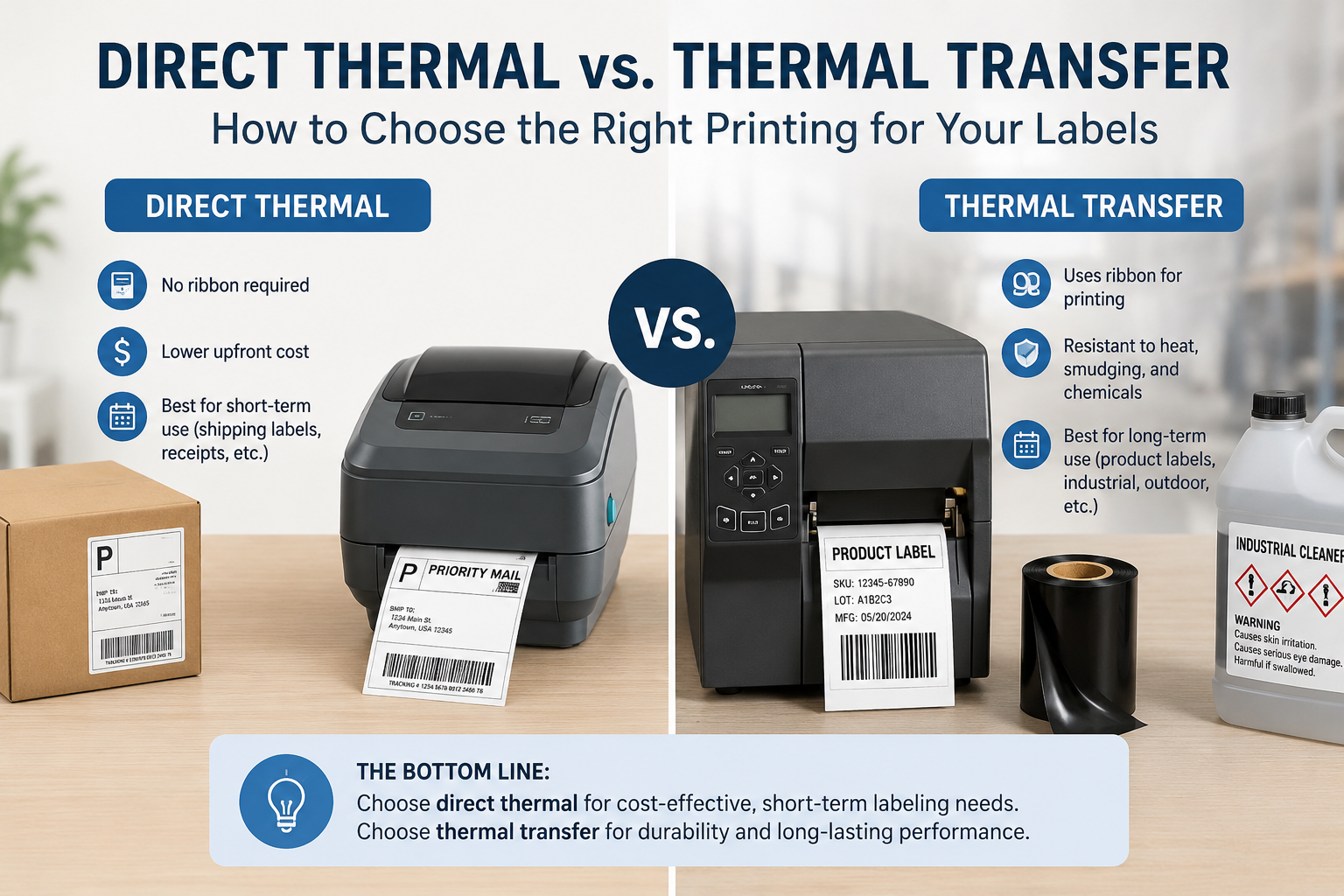
Thermal Transfer vs. Direct Thermal: Which is Right for your Label Application
May 15th 2026
Choosing between thermal transfer and direct thermal printing when printing labels can be a difficult task. The right choice impacts print quality, durability, operating costs, and overall performance in your application.
If you’re not sure which is right for you, this guide breaks it down in simple terms- so you can make the best decision for your operation.
Direct Thermal Vs. Thermal Transfer: What's the Difference?
There are two thermal printing methods: direct thermal and thermal transfer. Each method uses a thermal printhead that applies heat to the surface being marked. Direct thermal printing uses chemically treated, heat-sensitive media that blackens when it passes under the thermal printhead, while thermal transfer printing uses a heated ribbon to produce durable, long-lasting images on a wide variety of materials.
Direct Thermal Printing
Because they print without a ribbon, direct thermal printers are noted for their simplicity. Many companies like only having to change one set of media as well as only inventorying one product vs two. Direct thermal labels are very susceptible to heat, sunlight, abrasion, as well as oils, fats, greases, and blood.
If a direct thermal label is exposed to high heat or direct sunlight, it can activate the thermal layer in the paper and turn the label black, making your text or barcode unreadable. Exposures to the other above mentioned items can break down the coating causing smudging or discoloration of the label.
Direct Thermal Printing Advantages
- Produces crisp and clear printing and barcodes
- Lower supply costs. While the label material is more expensive than thermal transfer, you do not need a thermal ribbon.
- Fewer changeovers and no concern with matching up ribbon and label roll lengths to “time” your changeovers.
- Ideal for high-volume, short-term labeling like shipping and logistic labels, warehouse pick and pack, and any other short life labeling.
Direct thermal limitations
- Label image can fade over time
- Extremely sensitive to UV light, heat, and even fluorescent lighting
- Sensitive to abrasion and scuffing, leaving marks on the label and creating images or lines
- Shorter printhead life due to direct contact of facestock to printhead
Thermal Transfer Printing
Thermal transfer printing creates a crisp and clean image that is created by using a ribbon that melts and transfers the ink onto the label surface. This process creates a very durable image. There is a much broader selection of materials to choose from as well as finishes in comparison with direct thermal labels. When the facestock and ribbon are paired properly, these labels can withstand a wide range of difficult conditions including high heat applications, cold/freezer conditions, and outdoor applications. These conditions are often present with product ID, asset tracking, and UL/CSA/GHS applications.
Thermal Transfer Printing Advantages
- Long-lasting, highly durable print
- Resistant to heat, chemicals, moisture, and abrasion
- Broader range of label materials (paper in various finishes and films in gloss, matte, clear, white, silver, etc.)
- Printheads typically last longer in thermal transfer applications because the ribbon acts as a buffer between the printhead and the label
Thermal transfer printing limitations
- Since thermal transfer labels require ribbon, overall supply costs might be higher than direct thermal and you must inventory 2 items vs one
- Supply changes can take longer, especially if the roll lengths are not matched up properly between the labels and the ribbons
How to Choose the Right Option
Choose Direct Thermal if:
- Your labels need to last no more than 6 to 12 months
- You want to limit supplies and easier roll changes
- Your label will not be exposed to heat, sunlight, or chemicals
Choose Thermal Transfer if:
- You need long term durability
- Your label will be exposed to harsh conditions
- You require specific materials or compliance standards
- Print quality and longevity are critical
Still need help? Our team of labels experts is here and ready to assist.